
Synopsis
Potion Problems is a multiplayer party game, combining social deduction and magic. Navigate Pigeonpoint's College for Potion Making as a troublemaker or an apprentice. Collect ingredients, make potions, avoid being turned into a frog, and vote out troublemakers to complete your degree!
Release Trailer
Project Details
Potion Problems is a multiplayer social deduction game with a focus on potions (abilities) that players can craft within a match to trick and confuse other players. The game was created in the Advanced Game Project Capstone class at USC Games.
My Role
I worked as the design lead for the duration of the production. I set design goals, guided other designers, and worked with fellow discipline leads to maintain alignment during the project.
A New Social Deduction Experience
The main experience goal of the project was to create a social deduction game that gave players the agency to have individual impact throughout the round. We wanted the game to feel like "controlled chaos" driven by player action.
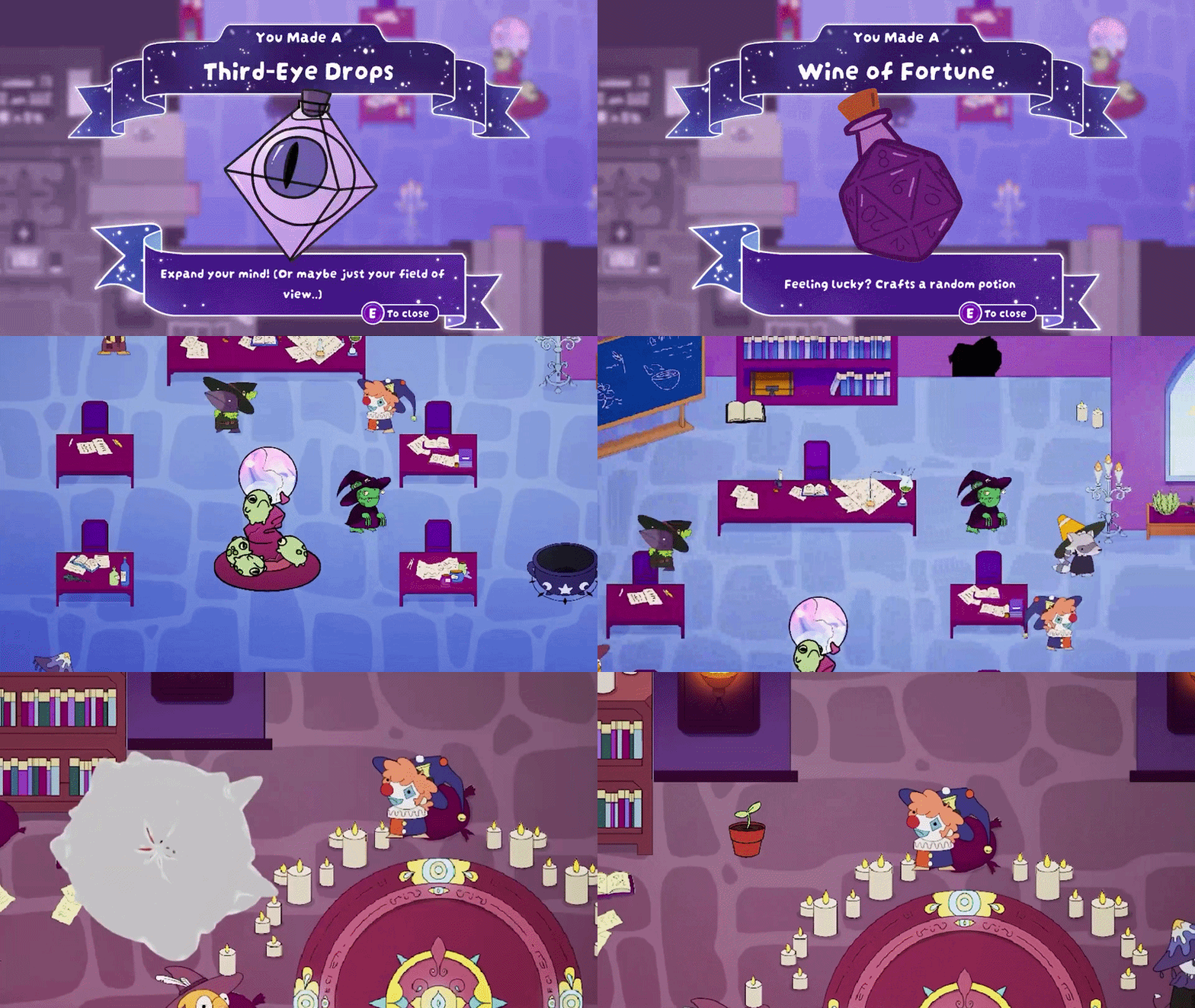
Our main approach resulted in formatting the traditional task system around a crafting loop where players would gather ingredients around the map and bring them to cauldrons. Players could choose which recipe they wanted to make and as a reward, they'd be given a powerful potion they could drink to cause chaotic effects that added a new layer for all players to consider when deducing who the "imposter" is.
Addressing Genre Pain-Points
The main point of improvement the team identified during market research was the lack of interesting gameplay options once a player was eliminated. As a result, players would leave matches early or not engage with whatever consolatory mechanic existed, leading to an imbalanced and unfun experience.
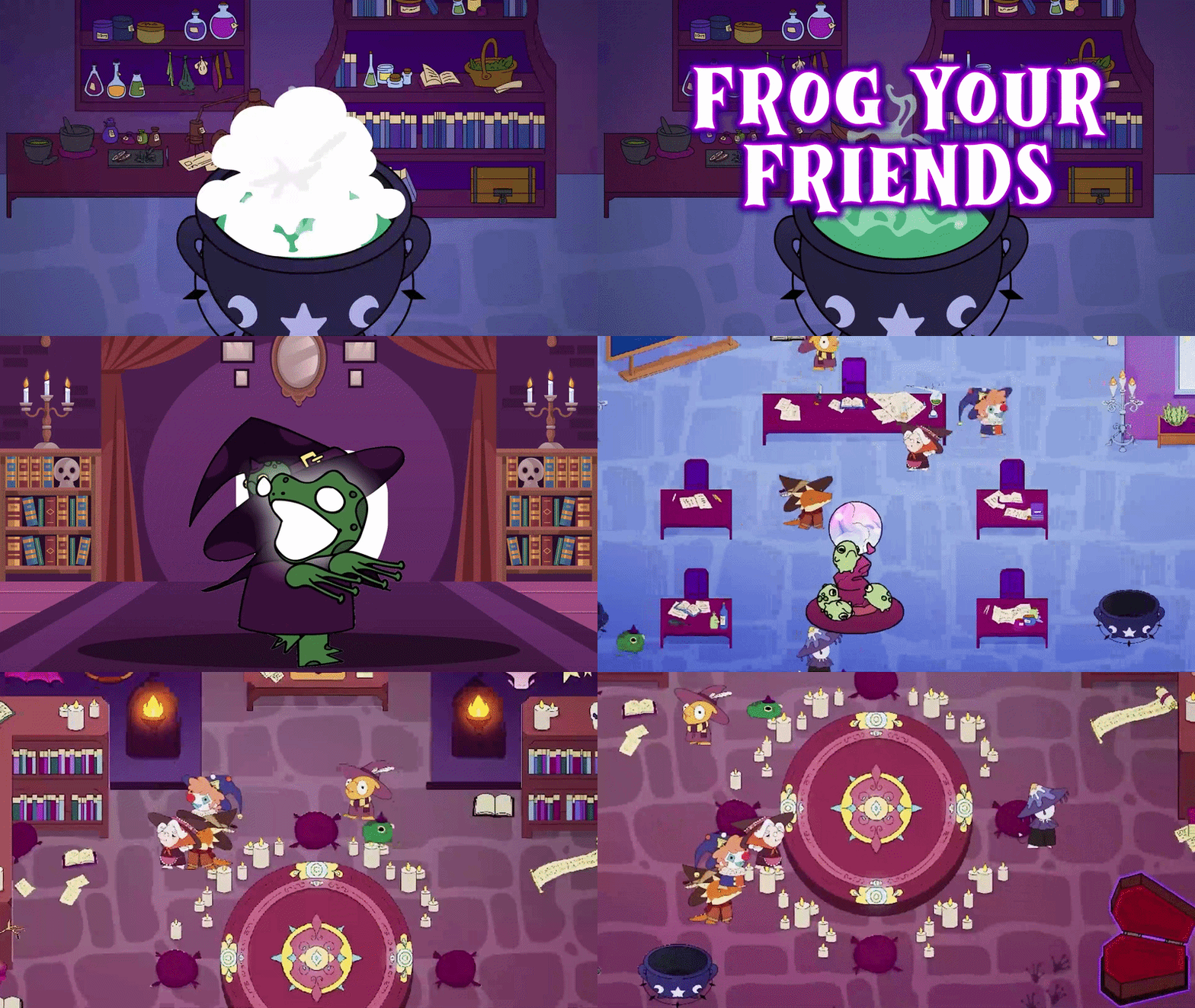
We solved this issue by making the "imposters" have to use the "Werefrog" potion to eliminate other players. When in werefrog form, your name would be hidden and you'd be anonymous for all other players until you transformed back into your regular form.
This allowed eliminated players to keep playing as a frog form because they didn't know who eliminated them, which added a new dimension to the deliberation phase and new gameplay opportunities.
Development Collaboration
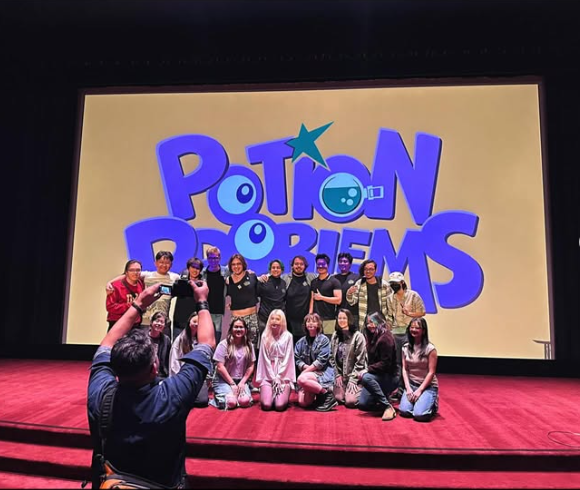
Potion Problems had a peak of 52 developers working on the project. As this was a student-run project organized by USC Games and its faculty, there was a mix of enrolled students (Advanced Game Project), volunteers, and external support provided by Otis College of Art and Design and Berklee College of Music.I would attend weekly all-hands meetings to align with the whole team on progress, attend leadership meetings to evaluate milestone progress and set the next week's agenda, and various other individual meetings with discipline leaders to tackle whatever challenges presented themselves.